

Binge eating is more than just eating too much now and then — it’s feeling out of control around food, often eating large amounts quickly, and feeling guilty or upset afterward. It can affect your body, mood, and confidence, leaving you stuck in a frustrating cycle.
Many people binge when they’re stressed, lonely, or upset, or after long periods of dieting or skipping meals. It’s not about willpower — it’s about unmet needs, both physical and emotional.
If you’re looking for how to stop binge eating, a place to start is eating regularly and getting support for patterns that feel out of control. Repeated episodes that cause distress are worth discussing with a clinician. You don’t need to wait for a change in weight or for things to feel severe enough.
What Is Binge Eating Disorder and When Should You Seek Help?
Binge eating can feel like a trap — one moment you’re reaching for comfort, the next you’re left feeling stuffed, guilty, and frustrated. It’s not about lack of willpower; it’s often a response to stress, emotions, or strict dieting. The good news is you’re not alone, and there are real, simple steps you can take to break the cycle and start feeling better. Let’s explore how.
What Is Binge Eating?
Binge eating means eating a large amount of food in a short time, often feeling unable to stop even when full or uncomfortable. It’s not the same as overeating at a party or holiday — it’s marked by a loss of control. People may eat quickly, in private, or until they feel stuffed, then feel guilt, regret, or shame afterward.
Unlike other eating issues, binge eating isn’t always followed by purging or extreme exercise, but the emotional weight can be heavy. Recognizing these signs is the first step to making a change.
Common Triggers of Binge Eating
Binge eating often starts from more than just hunger.
- Emotional triggers: Stress, sadness, or boredom can push someone to seek comfort in food. It becomes a way to cope, not just a response to an empty stomach.
- Environmental triggers: Skipping meals, keeping tempting foods close by, or following strict diets can set up the urge to binge. When the body feels deprived, it fights back with cravings.
- Psychological factors: Perfectionism or negative body image can increase pressure. People may feel trapped in a cycle of “I’ve already messed up, so why stop now,” which only feeds the habit.
How Binge Eating Affects Your Health
Binge eating doesn’t just affect weight; it impacts your whole well-being.
Physically, it can lead to weight ups and downs, stomach pain, and digestive problems. Emotionally, it brings feelings of guilt, anxiety, and low self-esteem, which can make the cycle even harder to break.
Socially, people may pull away from friends or avoid events out of embarrassment or fear of eating in public. This isolation adds to the emotional burden.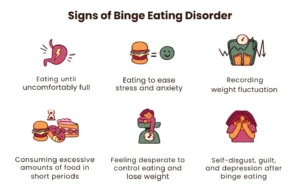
Signs of Binge Eating Disorder
If you often feel out of control around food, eat large amounts in a short time, and feel guilt or shame afterward, these may be signs of binge eating disorder and a signal that extra support could help. Tell the clinician how often you feel unable to stop and what happens afterward. They may ask about compensatory behaviors, such as vomiting, laxative use, fasting, or excessive exercise. Those details matter for getting the right assessment. Mention what you’re comfortable sharing first and ask how they protect your privacy.
Five Ways to Start Addressing Binge Eating
Stopping binge eating isn’t about willpower — it’s about breaking old patterns and building new habits. With a few simple, steady changes, you can start feeling more in control and at peace with food. Let’s look at some practical steps to help you get there.
Break the Restrict-Binge Cycle
Strict dieting can leave you hungry, frustrated, and more likely to binge. When your body feels deprived, it fights back with cravings that are hard to ignore. Instead of skipping meals or cutting out entire food groups, focus on eating regular, balanced meals and snacks. Giving your body steady fuel helps prevent the “all or nothing” cycle that leads to overeating. If you missed lunch and binged after work, look at what would make lunch possible tomorrow. Would packing something the night before help? Could you set a reminder before meetings start? An ordinary meal you can actually eat is a more practical goal than making a strict promise about what you won’t have later.
Practice Mindful Eating
Many binges happen when we eat on autopilot — fast, distracted, and disconnected from how we feel. Slow down. Notice when you’re hungry, pay attention as you eat, and stop when you’re comfortably full. Put away your phone, turn off the TV, and focus on your food. This helps you enjoy meals more and gives your body a chance to signal when it’s had enough.
Address Emotional Triggers
Binge eating often isn’t about food — it’s about emotions. Next time you feel the urge to eat, pause and check in: are you actually hungry, or are you feeling stressed, lonely, or upset? If it’s emotional, try a healthy coping tool like journaling, walking, deep breathing, or calling someone you trust. Breaking that emotion-food link takes practice but makes a big difference. Try noting the emotion and the practical situation together. You might write “lonely after an argument, hadn’t had an afternoon snack,” because both can matter. If you’re hungry, feeding yourself is an appropriate response. You can work on the feeling separately by calling a friend or taking time to settle.
Restructure Your Environment
Set up your surroundings to make regular eating easier. Keep a meal or snack available for days that run late. If the idea of keeping certain foods at home brings up anxiety, talk with a specialist about how to approach it. A plan that relies on banning foods can bring more pressure into a situation that already feels difficult.
Focus on Progress, Not Perfection
Be patient with yourself. Stopping binge eating is not about being perfect; it’s about making steady progress. Some days will be easier than others — that’s normal. Celebrate small wins, like eating one mindful meal or handling a craving without giving in. Each step forward builds confidence and helps you feel more in control over time.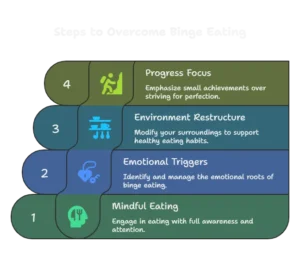 After an episode, try returning to the next planned meal or snack rather than skipping it to make up for what happened. If monitoring feels punitive, keep your notes brief and avoid tallying calories. The goal is to see when you could use more food, time, or support.
How Regular Eating Helps Break the Cycle of Binge Eating
In treatment, a dietitian and a clinician can work with you on eating habits and food intake without using rigid rules. If bingeing follows a long stretch without food, look at whether you have enough time to eat regularly. Binge episodes differ from an ordinary choice to eat more than expected. The feeling of loss of control, distress, and the pattern over time matter when you ask a healthcare provider for help.
How a Restrictive Diet Can Fuel a Binge
Start by letting go of the idea that food is “good” or “bad.” When you label foods this way, you create guilt around eating, which can trigger the urge to binge. Instead, think of food as fuel and enjoyment — both matter, and both have a place in your life.
Notice your inner voice. If you catch yourself thinking, “I blew it, so why stop now?” or “I’ll fix this by skipping meals tomorrow,” pause. These harsh thoughts keep you stuck. Replace them with kinder, more realistic ones, like “One meal doesn’t define me” or “I can make a better choice next time.”
Also, shift your focus from punishment to care. Eating well isn’t about control; it’s about giving your body what it needs to feel strong and satisfied. Celebrate small wins, like listening to your hunger cues or enjoying a meal without guilt. These little changes build trust in yourself over time.
Binge Eating Disorder, Bulimia, and Anorexia
Binge eating disorder is a mental health condition. Episodes of binge eating can also occur in bulimia, where repeated compensatory behaviors may follow a binge. Anorexia can involve restriction and other patterns of disordered eating. A clinician can help you understand your eating and choose appropriate care. In the UK, the NHS guide to treating binge eating disorder describes guided self-help and cognitive behavioural therapy (CBT).
Guided Self-Help, CBT and Binge Eating Disorder Treatment
Sometimes, no matter how hard you try, binge eating feels too heavy to handle alone — and that’s okay. If binges happen often, cause you distress, or affect your daily life, it’s a good time to reach out for help. The NICE eating-disorder guideline recommends guided self-help tailored to binge eating disorder for adults. If it is unsuitable or hasn’t helped after four weeks, the guideline recommends offering group eating-disorder-focused cognitive behavioral therapy. Regular meals and snacks are part of that treatment. You can ask for this help even if weight loss is not your goal.
Therapists trained in eating issues can help you understand why you binge and teach practical ways to manage it. Cognitive Behavioral Therapy (CBT) is one common approach that helps change the thoughts and habits that fuel binge eating. Some people also find support groups or online communities helpful because they show you that you’re not alone. A way to open the conversation is to say, “I’ve been eating in a way that feels out of control, and I’d like to talk about treatment for binge eating.” If the conversation turns only to weight, ask about a referral to someone with eating-disorder experience.
In some cases, your doctor may check for physical concerns tied to eating patterns, like blood sugar issues or digestive problems. Reaching out for help isn’t a sign of weakness — it’s a smart step that can speed up your progress and give you extra tools to break free.
Conclusion
Breaking free from binge eating isn’t about being perfect — it’s about learning, adjusting, and showing yourself patience along the way. Every small step you take, whether it’s eating a regular meal, recognizing an emotional trigger, or speaking kindly to yourself, moves you closer to lasting change.
Remember, healing your relationship with food isn’t just about stopping binges; it’s about building trust with yourself and feeling more at ease in your own body. You deserve to enjoy food without fear or guilt and to live a life that’s not ruled by the next craving or slip-up. Be gentle with yourself, reach out when you need support, and keep moving forward — progress comes with practice, not perfection.
