

What if your mind could help dial down pain the same way you lower the volume on a radio?
Living with pain that doesn’t go away can feel like carrying an invisible weight every single day. For some people, it lingers for months or even years, disrupting sleep, limiting mobility, and affecting relationships. Unlike a broken bone that heals, chronic pain becomes part of daily life—and it drains both body and mind.
Hypnotherapy for chronic pain uses guided attention and suggestions to help people explore a different response to pain. It is usually considered as an addition to pain care. If you want to try it, pick a concrete outcome, such as being better able to settle after a flare, and discuss it with the clinician who knows your pain history.
In this article, we’ll look at what chronic pain really means, how hypnotherapy works, and why science increasingly supports it as a practical option. By the end, you’ll see how this approach can fit into a broader pain management plan and help people regain more control over their lives.
Understanding Chronic Pain and Pain Management
What Defines Chronic Pain?
Chronic pain is more than an ache that lingers after an injury. Doctors usually define it as pain lasting longer than three to six months, well past the normal healing period. It can be sharp, dull, constant, or come in waves, but what makes it different is its persistence. Conditions like arthritis, fibromyalgia, lower back injuries, and nerve damage often lead to this ongoing discomfort. Unlike acute pain, which alerts the body to immediate harm, chronic pain persists even when the original cause has healed—or in some cases, even when no clear cause can be identified. What matters to the clinician is how pain behaves over time. If you can, note when it began, what brings it on, what makes it ease, and whether it changes what you can do. People often remember the worst moments in an appointment. A short record also shows the ordinary days between flares.
The Physical and Emotional Burden
Living with chronic pain takes more than a physical toll. It limits movement, disrupts sleep, and makes even simple tasks—like climbing stairs or carrying groceries—feel exhausting. Over time, it often affects mental health too. Many people with chronic pain struggle with stress, anxiety, or depression, creating a cycle where emotional strain makes pain feel worse. This constant push-and-pull between body and mind explains why treating chronic pain requires more than medication alone.
How Clinical Hypnosis Approaches Chronic Pain
A Clear Definition
Hypnotherapy is a therapeutic technique that uses guided relaxation, focused attention, and suggestion to help the mind respond differently to pain. Unlike stage hypnosis—where people seem to lose control—clinical hypnotherapy keeps patients fully aware and in control. The goal is simple: create a calm, receptive state where the brain can be guided into handling pain signals in a healthier way.
The Mind–Body Connection
Pain doesn’t exist only in the body; it’s shaped by the brain. When nerves send signals, the brain decides how strong or disruptive they feel. Hypnotherapy influences this process by lowering the brain’s sensitivity to pain signals and easing the stress response that often makes discomfort worse. As muscles relax and stress hormones drop, the body becomes less reactive to pain. The fact that attention and stress can affect pain does not make the pain imaginary. A flare is still real when imaging doesn’t explain the whole experience. Talk with a clinician about a new or unexplained change rather than treating it as a signal that you need to relax harder.
The subconscious plays a key role here. It manages automatic responses like breathing, heartbeat, and even how the body interprets discomfort. Through repeated sessions, hypnotherapy helps retrain these responses, teaching the body to react with calm instead of tension. Many people find that their pain feels less sharp, they handle flare-ups better, and they regain confidence in daily activities.
Scientific Evidence
In a systematic review of hypnosis added to usual care, the researchers estimated a small additional reduction of about 8 points on a 100-point chronic pain scale. An average is not a forecast for an individual. It includes people who reported more relief and people who reported little. Ask what benefit would matter enough for you to keep practicing.
A randomized trial in fibromyalgia assessed pain along with sleep, mental health, and quality of life. Those are distinct outcomes. The results in a fibromyalgia group don’t necessarily apply to arthritis, back pain, or another condition with a different cause and treatment plan.
When you read a study, look at what both groups received. A trial that adds hypnosis to usual care asks whether hypnosis adds something to care you’re already receiving. It cannot tell you whether it is safe to stop that care.
What Does Hypnosis for Pain Management Aim to Change?
Clinical hypnosis may change how some people experience pain. A patient with chronic pain can use hypnosis to practise redirecting attention or imagining a more comfortable sensation. That is different from treating the underlying condition. Ask a clinician whether reducing pain levels, improving activity, or coping with flares is the most useful goal for your chronic pain management plan.
Evidence for Hypnosis and Pain Relief
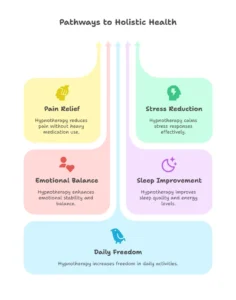
Living with pain day after day can make life feel smaller. The good news is hypnotherapy doesn’t just take the edge off—it brings changes that touch every part of daily living. Here are five ways it can help:
 1. An Additional Tool for Pain Management
A hypnosis session does not require a drug. That doesn’t mean it will reduce the dose you need. Ask the prescriber before changing medication, even if the first few appointments go well. Bring notes on when you take medicine, when flares occur, and which activities are easier or harder. Your prescriber can use that alongside the rest of your treatment history.
2. Calmer Stress Response
Chronic pain and stress feed off each other. Hypnotherapy helps break this cycle by teaching the body to relax instead of tighten under pressure. That calmer state lowers stress hormones and helps the body feel less reactive to pain.
3. Better Emotional Balance
Pain doesn’t just hurt physically—it wears down confidence and mood. With hypnotherapy, people often feel less anxious and more in control. It helps shift focus away from fear of flare-ups and toward living more fully.
4. Improved Sleep and Energy
When pain keeps you awake at night, everything feels harder the next day. Hypnotherapy encourages deeper relaxation, which can lead to better sleep and more energy. Restored sleep alone can make a big difference in how pain is managed.
5. More Freedom in Daily Life
The ultimate benefit is quality of life. Whether it’s enjoying family time, taking a walk, or getting back to hobbies, hypnotherapy helps people reclaim parts of life pain once took away. It’s not about curing pain but about making life feel bigger again. Pain intensity is only one measure. Maybe a good result is being able to finish a meal with friends, sleep through one more hour, or get back to an activity after a flare instead of canceling the whole afternoon. Choose one marker that makes sense for your condition and check it over several weeks.
What to Expect From a Hypnotic Exercise or Session
If you’ve never tried hypnotherapy before, it might feel mysterious. In reality, a session is calm, structured, and easy to follow. Here’s what typically happens:
The Typical Process
A session usually begins with a conversation. The therapist asks about your pain, lifestyle, and goals to guide the approach. Tell the therapist whether a body scan, closing your eyes, or sitting still makes pain or anxiety worse. An exercise can be adapted to focus on an external sound or comfortable point in the room. Agree how you’ll signal to pause and how you’ll return to ordinary activity afterward.
Next comes the induction, where you’re led into a relaxed but focused state—similar to drifting into a daydream. In this state, the therapist introduces calming suggestions or imagery, like turning down a “pain dial” or imagining warmth loosening tight muscles. These ideas help the brain respond differently to pain signals.
The session ends with a gentle return to full awareness. Most people feel refreshed and clear-headed afterward. Some therapists also provide recordings or exercises to practice at home, which reinforce the progress made in sessions.
Safety and Misconceptions
Many people assume hypnosis means losing control, but that’s a myth. In hypnotherapy, you stay fully aware, in control, and can stop at any time. It’s a cooperative process, not something done to you.
Because it’s drug-free and non-invasive, hypnotherapy is considered safe for most people. Side effects are rare and usually mild, such as feeling a little groggy after the first session. Most describe the experience as deeply relaxing and empowering.
Can Self-Hypnosis Help You Manage Chronic Pain at Home?
If a therapist recommends self-hypnosis, try it in a position that is comfortable for your lower back pain or other symptoms. During hypnotherapy sessions, tell them if focusing on the intensity of the pain makes it harder to relax. Keep your regular appointments and discuss any changes to pain medication with your prescriber. You can consider hypnosis treatment as a complementary therapy and track whether the pain reduction carries over into the next activity.
How to Use Self-Hypnosis Alongside Pain Care
Chronic pain doesn’t look the same for everyone, and neither does the relief people seek. Hypnotherapy has shown promise across many conditions where traditional treatments alone may fall short. Before using self-hypnosis for chronic pain, ask how the clinician wants you to respond if your symptoms change. Keep follow-up appointments so you can discuss coping, medication, and physical activity together. This is particularly helpful if pain affects sleep or you have several treatments going on at once.
Conditions Where Hypnotherapy Helps
- Arthritis and joint pain – many patients find hypnotherapy reduces stiffness and makes movement easier.
- Fibromyalgia – known for widespread muscle pain and fatigue, this condition often responds well to guided relaxation and mental reframing.
- Migraines – hypnotherapy can help reduce both the frequency and intensity of attacks.
- Irritable Bowel Syndrome (IBS) – studies show it helps lessen abdominal pain and discomfort.
- Cancer and post-surgical pain – patients often report relief from both physical discomfort and the anxiety surrounding treatment or recovery.
Because hypnotherapy works by changing how the brain processes pain, it can be applied across many conditions, not just one.
Suitability and Limitations
Most adults can safely try hypnotherapy, but it’s not a one-size-fits-all solution. People with severe psychiatric conditions, such as untreated psychosis, should seek medical clearance before starting. If you’re looking for a hypnotherapist, ask about experience with persistent pain, guided imagery, and how they adapt relaxation when your position is uncomfortable. You can ask to stop any exercise.
The best results come from consistency and openness. Like physical therapy, hypnotherapy requires practice and commitment over time. For those willing to engage with the process, the rewards can include less pain, greater control, and a stronger sense of well-being.
Conclusion
Chronic pain often convinces people that their options are limited, but hypnotherapy shows there’s another path worth exploring. By teaching the mind to process pain in new ways, it doesn’t erase the struggle but reshapes it into something more manageable. That shift can mean less reliance on medication, better sleep, and the freedom to enjoy more of life again.
What makes hypnotherapy powerful is not just the science—it’s the sense of control it gives back to people who often feel at the mercy of their condition. Used alongside medical care, it becomes more than a technique; it becomes a practical tool for reclaiming parts of life that pain once took away.
If you’re living with chronic pain, consider speaking with a certified hypnotherapist and your doctor about whether this approach could fit into your treatment plan. Relief may not be instant, but each small step can move you closer to living with less pain and more possibility.
