

Quitting smoking is tough because it’s more than a habit—it’s both physical and mental. Traditional methods like patches or gum focus on nicotine, but they don’t change the mind’s connection to smoking.
If you want to stop smoking with hypnotherapy, it helps to know what a session actually offers. You might imagine your usual smoking break and rehearse a different response. A session does not supply the same support as a quitline or a medication that reduces nicotine withdrawal. Ask how the pieces would fit into the same quit plan.
This article explains how hypnotherapy works, what science says about it, and what you can expect if you try it.
How Does Hypnosis Work When You Want to Quit Smoking?
What Is Hypnotherapy?
Hypnotherapy is a guided process that helps you reach a calm, focused state where your mind becomes more open to positive suggestions. It doesn’t put you under anyone’s control—you stay aware and in charge the whole time. The goal is to access the subconscious mind, where long-held habits and beliefs about smoking are stored. Before booking, ask whether the practitioner is trained in tobacco dependence or coordinates with a clinician who is. Share any medications you use and ask whether the practitioner expects you to stop them. A quit plan should make space for a conversation with your prescriber about what to continue, especially if you have already started treatment.
Many people think hypnosis is about tricks or mind control, but it’s closer to a deep form of relaxation and concentration. It helps quiet mental noise so you can focus on changing the thought patterns that make smoking feel necessary or comforting.
How Hypnotherapy Works for Smokers
 Smoking often becomes automatic—a response to stress, boredom, or certain times of day. Hypnotherapy works by interrupting those automatic patterns and reprogramming how your mind reacts to them. Through verbal suggestions, the therapist helps create new mental links—such as associating cigarettes with unpleasant smells or the feeling of freedom instead of stress relief.
This mental reset helps reduce cravings and the emotional pull of smoking. Over time, your subconscious begins to reject cigarettes as something unnecessary. Many sessions also include positive reinforcement, such as imagining life as a confident non-smoker or breathing clean air with ease.
Some people use self-hypnosis or recorded sessions afterward to strengthen these changes. When practiced consistently, hypnotherapy helps replace the urge to smoke with a sense of calm and control—making it easier to quit and stay smoke-free.
Can Hypnosis for Smoking Cessation Help You Quit for Good?
Hypnosis for quitting smoking may help you rehearse a change in response to a smoking habit. The evidence on the effectiveness of hypnosis is uncertain. The results of a trial of hypnotherapy for smoking cessation can depend on which smoking cessation intervention it was compared with, how many people completed the trial, and how long researchers checked smoking abstinence. Ask whether the reported outcome reflects the use of hypnosis alone or a broader stop-smoking program.
Research on Hypnosis for Smoking Cessation
Overview of Major Studies
A Cochrane review of 14 trials with 1,926 people found insufficient evidence that hypnotherapy worked better than other behavioral support or unassisted quitting. The studies differed in how they delivered hypnosis and what comparison they used. Many had risks of bias. The review did not establish that hypnosis doubles your chances of staying smoke-free.
A randomized comparison of group hypnotherapy and cognitive behavioral therapy did not find a significant difference in its primary long-term abstinence outcome. A trial that fails to detect a difference doesn’t automatically prove the two methods are equally effective. When someone quotes a success rate, ask whether it comes from this kind of comparison or from clients who chose to report back.
Comparing Hypnotherapy to Other Quit-Smoking Methods
Nicotine replacement therapy, prescription medication, and counseling can each be part of a smoking cessation plan. The CDC reports that counseling and medication together can more than double the chances of quitting. If you tried the patch before and still smoked after dinner, bring that detail to a clinician. You can discuss withdrawal and plan for the after-dinner cue separately.
Tell your practitioner about any smoking treatment you are already using. Hypnosis is an option to discuss alongside better-supported care, and a clinician can advise on medication choices and dosing.
The Psychology Behind the Results
Hypnotherapy works because it speaks directly to the subconscious, where habits are stored. By changing how the brain associates cigarettes with comfort or stress relief, hypnosis helps weaken the emotional grip smoking holds. It also builds self-belief—helping people see themselves as non-smokers rather than trying to “quit.”
This mental shift is key to staying smoke-free. Research shows that when people truly change how they view smoking, relapse rates drop significantly. Hypnotherapy supports that transformation, helping the mind and body align toward lasting change.
What to Expect From Hypnotherapy for Smoking
Hypnosis can help some people rehearse how they’d respond to a trigger. That is a different claim from saying hypnotherapy for smoking cessation helps people quit smoking at higher rates than other support. If you are a smoker considering hypnosis for smoking cessation, ask whether the practitioner offers relaxation, self-hypnosis, or follow-up support, and how they evaluate abstinence. You can ask about using hypnosis alongside counselling or nicotine replacement therapies.
How a Stop-Smoking Hypnotherapy Session Works
The Process Step-by-Step
A typical quit-smoking hypnotherapy session starts with a short conversation about your smoking history, triggers, and goals. The therapist uses this to shape the session around your specific habits and motivation. Once you’re comfortable, you’re guided into a calm, focused state—similar to deep relaxation or meditation. The discussion might cover when you smoke the first cigarette of the day, how many you smoke, and which past attempts lasted longest. Then you can choose a scenario to rehearse. If the first cigarette comes before your feet have barely hit the floor, practicing a late-afternoon work break may miss the hardest part.
During this state, your mind becomes more open to positive suggestions. The therapist might help you imagine cigarettes as unpleasant, reinforce the benefits of quitting, or build confidence in staying smoke-free. These suggestions aim to weaken the emotional and habitual pull of smoking. You remain aware and can open your eyes or speak at any time.
The session usually ends with a short discussion about how you feel and what to expect in the next few days. Many people report feeling lighter, calmer, or simply less drawn to cigarettes afterward.
How Many Sessions Are Needed
Ask what follow-up looks like instead of choosing a provider by the number of sessions advertised. Will they ask about abstinence at six months? What happens if you have a cigarette after the first week? Agree on when to reassess if cravings are still interfering with your day.
Finding a Qualified Hypnotherapist
Choosing the right hypnotherapist makes a big difference. Look for certified professionals with training in smoking cessation or behavioral therapy. Ask about their approach and past results, and avoid anyone promising instant results or using pressure tactics.
You can check trusted organizations such as the American Society of Clinical Hypnosis or the National Guild of Hypnotists for verified practitioners. A skilled therapist will make you feel safe, informed, and supported throughout your quitting process.
Compare Smoking Cessation Methods Before a Hypnosis Session
Compare using hypnosis with better-established treatments for smoking. Nicotine replacement therapies such as nicotine patches, gum and lozenges can help manage withdrawal. A smoking cessation program can offer individual coaching or support groups. Consider hypnosis to help you rehearse what to do when the desire to smoke comes up, and discuss whether medication or counselling can help you quit smoking.
How to Tell if Hypnosis Really Helps a Quit Attempt
Track the number of days you’re smoke-free and what happens during your hardest trigger. If you’re using hypnosis to quit smoking, pay attention to the timing of any change and whether you started another treatment at the same time. A single session can feel helpful without answering whether you’ll quit smoking for good.
Can Self-Hypnosis Help You Quit Smoking?
Who Benefits the Most
Someone who prefers guided imagery may find the exercise engaging. Readiness alone cannot predict whether hypnosis will help someone quit smoking. You can be fully committed and still benefit from medication, counseling, or a change in your plan.
Come with one smoking trigger you can describe in detail. Maybe you feel fine all afternoon until you pull into the driveway. What is the first thing you see or do there? That gives you a practical scene to rehearse instead of an abstract instruction to stop smoking.
When It Might Not Be the Right Fit
Hypnotherapy may not be suitable for everyone. Those who are highly skeptical, uncomfortable relaxing, or unwilling to engage with the process might not experience meaningful results. It’s also important for people with certain mental health conditions to speak with their doctor before starting.
For many, combining hypnotherapy with other proven strategies—like counseling, nicotine replacement, or lifestyle changes—can create better outcomes. The key is finding what works for you and staying consistent with it.
Hypnosis for Smoking: How a Smoker Can Prepare
In a stop-smoking hypnosis session, a hypnotherapist may use relaxation and focused attention before rehearsing a response to the desire to smoke. Share your typical smoking routine. If a practitioner claims smoking cessation hypnosis can help everyone quit smoking for good, ask how they know. More reliable contacts include your quitline or a healthcare provider who can discuss a full cessation plan.
What Should a Smoker Ask Before Booking a Hypnosis Session?
If your goal is to stop smoking, ask what happens in the first session, what you’ll practice afterward, and when they’ll follow up. A provider should be able to explain why hypnosis may help you rehearse a response and acknowledge what smoking cessation studies cannot guarantee.
How Hypnosis to Quit Smoking Fits a Smoking Cessation Plan
Before undergoing hypnosis, ask how the practitioner thinks a hypnosis session fits into your cessation plan. Smoking hypnosis often focuses on rehearsal. Research does not show that hypnosis really helps everyone quit smoking for good or that it produces higher quit rates than established care. To help people stop smoking, a clinician can discuss nicotine replacement, coaching, and other treatments. Hypnosis may help with practising a response to a familiar craving. Use the quit attempt and follow-up to find out whether that practice makes a difference.
5 Tips to Maximize Your Results with Hypnotherapy
Quitting gets easier when you actively support the process. Here are five simple ways to make your hypnotherapy sessions more effective and long-lasting.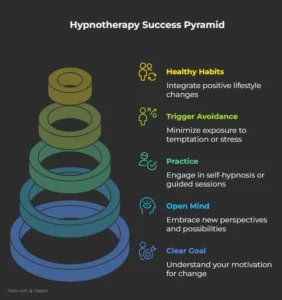 Choose what you will do between sessions. Take a note into your next appointment that says which trigger you practiced, whether you smoked, and what you might change. For a lapse, write down the time and circumstances without turning it into a verdict. One specific observation can give you something workable for the next attempt.
-
Be Clear About Why You Want to Quit
Go into hypnotherapy with a strong personal reason. Whether it’s for your health, family, or peace of mind, having a clear “why” keeps you focused and motivated throughout the process.
-
Keep an Open Mind
Hypnosis works best when you allow yourself to relax and trust the process. You don’t need to “believe” in it blindly—just stay open and willing to follow your therapist’s guidance.
- Ask if the program reports outcomes for everyone who started, including participants who dropped out. A percentage based on people who completed all the visits can leave out those who found the approach unhelpful or couldn’t return.
Practice Self-Hypnosis or Guided Audio
Reinforcing positive suggestions at home helps the results last longer. Many therapists provide recordings you can use daily to strengthen new thought patterns.
- Try the new routine in the circumstances you’re expecting. If the scenario is a break at work, decide where you’ll go, who you might invite along, and what you’ll do if coworkers light up. Then note whether you could follow the plan when the break came.
Avoid Triggers Early On
Stay away from situations, people, or habits linked to smoking—like drinking alcohol or taking breaks with smokers. This gives your new mindset time to solidify.
-
Combine It with Healthy Habits
Replace smoking with positive routines like walking, deep breathing, or staying hydrated. These small changes keep stress low and make quitting feel more natural.
Tell one person when you’d welcome a check-in. If the first evening after payday is the usual trouble spot, ask them to call then. If you smoke again, contact a quit coach or clinician promptly to adjust your plan while you can still recall what happened.
How to Judge Claims About Quit Smoking Hypnosis
When you read clinical and experimental hypnosis research, check how investigators measured success and who was included. A news item about hypnosis for smoking cessation might report how many people planned to stop smoking, while the actual trial asks whether they remained smoke-free months later. That distinction matters when choosing between hypnotherapy for smoking, medication, and a behavioural smoking cessation program.
Conclusion
Quitting smoking takes more than willpower—it takes changing how your mind connects to the habit. Hypnotherapy offers a simple, natural way to do that by working directly with the subconscious patterns that keep you smoking. It helps you build new associations, reduce cravings, and feel more in control of your choices.
While no method works for everyone, hypnotherapy stands out because it targets the root of the problem—the mental habit, not just the physical craving. Combined with commitment, consistency, and healthy daily routines, it can be a strong path to lasting freedom from cigarettes.
If you’ve tried other methods and still struggle to quit, hypnotherapy might be the reset your mind needs to finally break free and start fresh.
