

You seem okay on the outside, handling your daily routine with a brave face, but how do you really feel on the inside when your willpower fades? Building true self-discipline often feels like an uphill battle, especially when you are trying to overcome deeply ingrained habits that no longer serve your higher purpose. Through compassionate guidance and the power of a customized hypnosis session, you can finally begin to bridge the gap between where you are and where you truly want to be in your life.
How Hypnosis for Self-Discipline Works

What is Hypnosis?
Many people wonder what hypnosis actually feels like, often fearing a loss of control, but it is simply a natural state of deep relaxation and heightened focus. During a guided hypnosis experience, you remain fully aware and safe while your conscious mind takes a gentle rest, allowing your subconscious to open up to positive suggestion and lasting mental transformation without any pressure or judgment. A recording can be useful if you know when you’ll listen and what you want to practice afterward. If the goal is to start a report, end the recording, open the document, and write the first heading. The exercise is more useful when it leads to a task you already intend to do.
The Science Behind Hypnotherapy
A hypnosis session can give you time to picture an ordinary task and practice returning to it when you get distracted. That is a narrower claim than saying clinical hypnotherapy rewires the brain for lasting discipline. A better way to judge the practice is to look at how often you follow through when the recording or session is over.
How Hypnosis Affects the Mind and Behavior
What often feels automatic is a sequence you’ve repeated. You hear a notification, look at your phone, and leave the task halfway through. Guided hypnosis can give you a chance to imagine hearing the notification and finishing the current step before checking it. The real test comes the next time your phone buzzes.
What to Listen For in a Guided Hypnosis Session
Guided Hypnosis Sessions Explained
Embarking on your journey with guided hypnosis allows you to relax deeply while a trained professional or a specialized app provides gentle suggestions and support. During each soothing session, you learn to quiet your inner anxiety and sharpen your focus, making it much easier to build lasting self-discipline. This supportive technique empowers you to bypass self-doubt, access your subconscious mind, and nurture the unwavering confidence needed to achieve your personal goals with ease.
Self-Discipline Techniques in Hypnotherapy
Integrating powerful self-discipline techniques into your daily routine helps transform how your brain responds to temptation and fatigue. As you listen to specialized therapy and engage in mental relaxation exercises, you actively reshape your cognitive patterns and boost your self-control. This compassionate hypnotherapy approach addresses the root causes of hesitation, helping you overcome negative habits and embrace a life filled with newfound motivation, emotional balance, and true personal transformation. One way to make the rehearsal more concrete is to write an if-then plan. A meta-analysis of 94 tests found that linking a situation to a planned action helped people reach their goals. Those studies were about planning, rather than hypnosis. You can try the technique with or without a recording: if you make your morning coffee, then you open the notebook and write the first line.
Creating Effective Hypnosis Sessions
Designing a truly effective hypnosis session involves tailoring every positive suggestion to address your unique mental health needs and aspirations. Whether you choose to download a trusted program or work directly with an experienced hypnotherapist, consistency remains the key to your success. By dedicating a few quiet hours each week to these life-changing techniques, you cultivate the mental clarity and steadfast discipline required to reach your dreams and thrive. Make the suggestion clear enough to picture from start to finish. You might rehearse finding the notebook on the counter, sitting down while the coffee brews, and writing a rough first line. Place the notebook there before you go to bed. The visible cue can do some of the work you were expecting motivation to do.
What to Listen For in Guided Hypnosis for Self-Discipline
If you find a guided hypnosis session on YouTube, check the goal, who recorded it, and what they ask you to practise afterward. An audio track that asks you to visualize completing a single task may be easier to put into practice than a promise of overnight discipline. Listen in a place where you can give it your attention. If you suffer from persistent anxiety or a medical condition that affects motivation, consider asking a qualified clinician how the exercise fits your treatment.
Practise Self-Discipline and Motivation Between Sessions
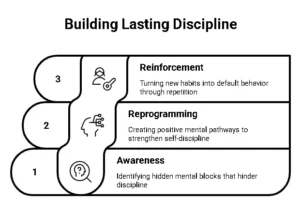
If you listen to a guided hypnosis session on YouTube, check whether the creator names a specific discipline technique and gives advice you can test. Watching a longer video or an advanced techniques masterclass does not tell you that the training fits you. For example, a pair of headphones may make it easier to listen without distractions, but the exercise should still leave you aware of your surroundings. Use it only in a place where you can relax safely.
Hypnosis for Self-Discipline: One Technique to Improve Confidence
To test a self-discipline technique, choose a consistent time and the one thing you can do afterward. When you listen to a guided hypnosis session, note whether the exercise helps you start the task while you’re still learning the routine.
Clinical Hypnosis, Motivation and Self-Discipline
Hypnosis for self-discipline works best as a practical test of a single goal. To learn whether a guided hypnosis session helps you succeed, decide what you can do when the session is over. If bedtime scrolling is the habit you want to change, choose where you’ll put the phone and try that routine for a week. A session may build awareness of when the habit starts.
A Hypnotherapy Session to Improve Confidence and Motivation
For a hypnosis session about self-discipline, choose what you’ll practise in the room and what you’ll do afterward. For example, rather than listening to hours of hypnosis and coaching about happiness, ask for a technique you can use when you’re tired. The clinician may use a brief guided hypnosis exercise to rehearse the action. Take a note afterward so you can explain what helped and what remains hard.
When a Medical Condition Affects Motivation
Persistent difficulty starting daily tasks can have many causes. If you suffer from low mood or have a medical condition, ask a clinician how to combine habit practice with treatment. A video walkthrough is not a substitute for professional advice.
Improve Confidence and Discipline With Small Goals
When you work to improve your overall confidence, you often discover that self-discipline naturally follows as you learn to trust your inner voice. Through a personalized hypnotherapy session, a trained professional helps you ease anxiety and quiet self-doubt. By listening to positive suggestions and engaging in deep relaxation, your subconscious mind absorbs empowering beliefs, allowing you to achieve your highest potential and successfully reach every personal goal you set.
The Link Between Confidence and Discipline
Building unshakeable confidence directly strengthens your self-discipline, creating a powerful foundation for lasting personal transformation and daily success. When you practice clinical self-hypnosis and utilize a trusted app, you actively train your brain to replace old negative habits with empowering routines. This gentle technique helps you overcome mental blocks, reduce stress, and cultivate the steadfast inner strength required to thrive through life’s challenges. Give yourself credit for a small action you can count, such as laying out your walking shoes before bed. You don’t have to feel confident to do that part. After several repetitions, look at whether you followed through more often on the days the shoes were already waiting by the door.
Clinical Approaches to Boosting Confidence
If you work with a hypnotherapist, ask how you’ll know whether your exercise is helping. For a writing goal, track the days you start within ten minutes of the cue. For a bedtime goal, record when you put your phone down. An observable result helps you decide whether to continue, change your plan, or use another form of support.
Listening to Your Inner Self During Sessions
Taking time to truly listen to your inner self during a guided hypnosis experience allows you to uncover hidden emotional needs and quiet external distractions. As you relax deeply, your subconscious mind opens up to transformative cognitive reframing and gentle suggestions. This nurturing process builds remarkable self-control, helping you align your daily habits with your truest desires and approach every obstacle with grace.
Use Rehearsal to Improve Focus and Concentration
Try a shorter session if you tend to put off the practice itself. A client who wants to improve a morning routine might imagine putting on shoes after breakfast, then try it before lunch. Confidence and self-esteem can grow as you notice what you actually did. Decide what long-term success means to you, such as walking several days a week.
What Self-Discipline Practice Can and Cannot Address
A self-discipline session can help you rehearse a task. If a condition like clinical depression makes it difficult to start most tasks, discuss what you’re experiencing with a healthcare professional and ask about medical treatment. You can use a shorter, manageable goal alongside your care.
Motivation and Overcoming Negativity
Finding steady motivation can feel difficult when negative thought patterns weigh heavily on your mind and drain your precious energy. Fortunately, specialized hypnotherapy provides a gentle, effective way to overcome self-doubt and reignite your passion for life. By engaging in soothing relaxation exercises and listening to positive coaching, you can easily shift your perspective, boost your inner drive, and create a balanced routine that supports your dreams.
Using Hypnosis to Enhance Motivation
Utilizing hypnosis to enhance your daily motivation transforms the way your subconscious mind responds to fatigue, procrastination, and everyday discouragement. Whether you work alongside an experienced hypnotherapist or download a supportive program, each session delivers powerful suggestions designed to inspire action. This proven technique helps you overcome mental exhaustion, sharpen your focus, and enthusiastically achieve your goals with renewed energy and joy. Think through what you’ll do when the usual cue is missing. If you write after coffee but rush out of the house on Friday, could you open the notebook after lunch? Pick a version you can complete on that day. Having a second cue helps you preserve the routine without having to reconstruct your morning.
Addressing Negative Thought Patterns
Gently addressing deeply ingrained negative thought patterns requires patience, self-compassion, and the safe space that professional hypnotherapy naturally provides. As you release past trauma and quiet your inner critic, your brain naturally rewires itself to foster healthier cognitive habits. This comforting process helps you ease depression, banish anxiety, and build a resilient mindset capable of weathering any storm with remarkable grace and inner peace.
Building a Positive Mindset with Self-Hypnosis
Practicing regular self-hypnosis equips you with an invaluable skill for cultivating a bright, positive mindset in your everyday life. By dedicating quiet moments to mental relaxation and empowering visualization, you take active control of your emotional well-being. This transformative discipline ensures you can consistently overcome self-doubt, nurture deep self-love, and embrace a future filled with boundless hope, harmony, and lasting personal growth. Try keeping a brief record for one week. Note the cue, whether you started, and what got in your way. If the task kept losing out to an early meeting, move the cue. If you got started but stopped because the task was unclear, write down the next concrete action before your next practice.
