

In today’s fast-paced life, many people feel like their minds are constantly running — worrying about the future, replaying the past, and rarely finding a moment of calm. That’s where hypnotherapy and mindfulness come together as a surprisingly effective team. Each works differently, but together they create a powerful balance between awareness and change.
Mindfulness helps you notice an experience as it happens. Hypnosis uses focused attention and suggestions to rehearse a response. The difference is easier to see in a real moment: if you’re tense before a meeting, mindfulness might help you notice how tightly you’re gripping your pen. In hypnosis, you might picture putting both feet on the floor and saying the sentence you’ve been avoiding.
This combination isn’t about losing control or “getting hypnotized.” It’s about gaining control — over stress, habits, and emotional patterns that often feel automatic. More people are discovering how these two approaches help them focus better, worry less, and respond to life with more calm and clarity.
In the next sections, we’ll explore how hypnotherapy and mindfulness work individually, how they strengthen each other, and how you can use both to support emotional healing and mental clarity.
What Are Hypnosis and Mindfulness?
What Is Hypnotherapy?
Hypnotherapy is a guided process that helps a person reach a relaxed, focused state where the mind becomes more open to positive suggestions. In this state, the conscious mind steps aside, allowing the subconscious—the part that shapes habits, emotions, and automatic reactions—to be influenced in healthier ways.
It’s not about losing control or falling asleep. You stay aware, but your attention turns inward, making it easier to change patterns that are hard to break through logic alone. For example, if someone struggles with smoking or anxiety, hypnotherapy helps identify the emotional triggers behind those behaviors and gently reprogram how the mind responds to them.
Therapists use different techniques such as guided imagery, affirmations, and relaxation methods to help the mind focus on desired outcomes. Over time, this can reduce stress, improve sleep, and help people manage emotions more effectively.
What Is Mindfulness?
Mindfulness is the practice of being fully present—aware of your thoughts, feelings, and surroundings without judgment. It’s about noticing what’s happening right now instead of getting lost in what already happened or what might happen next.
This simple awareness can make a big difference. By observing thoughts instead of reacting to them, you create space to respond calmly rather than automatically. Regular mindfulness practice, whether through meditation, breathing exercises, or daily pauses, strengthens concentration and reduces mental clutter.
A review of 47 trials involving 3,515 participants found moderate evidence that mindfulness meditation programs improved anxiety symptoms and lower certainty about an effect on stress or distress. These were structured programs, often lasting weeks. The findings can help you set expectations for mindfulness, but they do not establish that adding hypnosis makes it more effective.
Both hypnotherapy and mindfulness promote self-awareness and calm, but they work in different ways. Mindfulness strengthens conscious awareness, while hypnotherapy rewires deeper thought patterns. When combined, they create a balanced approach to mental and emotional healing—something we’ll explore next.
Mindfulness and Hypnosis in Clinical Practice
Mindfulness practices train attention and awareness. In clinical hypnosis, a practitioner may use an induction, meaning instructions that direct your focus before introducing a suggestion. A hypnotic state can feel absorbing, but the experience varies. Mindful hypnotherapy combines techniques from both approaches. It does not follow that every mindfulness-based program or form of psychotherapy uses hypnosis.
How Hypnotherapy and Mindfulness Work Together

You can use mindful awareness to spot the part of a situation you want to handle differently. Then a hypnotic exercise can give you a chance to imagine that change in enough detail to try it. It’s fine to keep the practices separate for a few days while you get familiar with each one.
Think of it like working on a garden. Mindfulness helps you see the weeds clearly—those thoughts or habits that no longer serve you. Hypnotherapy goes deeper and helps you pull them out by the roots. Together, they make growth possible and lasting.
This combination allows people to process emotions instead of suppressing them. While mindfulness keeps you grounded in the moment, hypnotherapy helps reframe the subconscious stories attached to past experiences. Over time, this creates a calm, steady state of mind that reacts less and responds more.
Shared Goals and Subtle Differences
Both practices aim to bring balance, awareness, and inner peace. Yet, they work through different paths: In a mindfulness exercise, noticing that your shoulders are tense is enough. During guided hypnosis, a practitioner may suggest lowering them while you imagine a particular situation. You can do either one on its own. If you try both on the same day, notice which part you remember and use later.
- Mindfulness teaches observation and acceptance. It helps you understand what’s happening without judgment.
- Hypnotherapy encourages transformation. It helps you change how you think, feel, or react by working directly with subconscious conditioning.
When used together, they support each other naturally. Mindfulness builds self-awareness, making it easier to recognize triggers. Hypnotherapy then helps rewrite those responses, turning awareness into action. The result is a smoother process of healing and self-improvement—less resistance, more clarity.
As you can see, mindfulness and hypnotherapy complement each other beautifully—one builds awareness, and the other enables deep change. In the next section, we’ll look at the real-world benefits of combining them, from reducing anxiety and stress to improving focus and emotional balance.
How Mindfulness Meditation and Hypnosis Approach Stress
Finding peace of mind isn’t just about relaxation—it’s about changing how your mind and body respond to life’s daily pressures. When hypnotherapy and mindfulness work together, they create a balanced approach that helps calm your thoughts, reshape habits, and strengthen emotional stability. Each supports the other, making healing and growth feel more natural and lasting.
-
1. Reducing Stress and Anxiety
Stress often begins in the mind before it shows up in the body. Mindfulness helps you pause and notice anxious thoughts before they spiral, while hypnotherapy works deeper to change how your subconscious reacts to stress. Together, they retrain both the body and mind to stay calm under pressure.
With regular practice, breathing steadies, tension eases, and focus improves. People often describe feeling more grounded and less reactive, even in situations that once caused anxiety.
-
2. Breaking Negative Habits
When you notice an urge to check your phone while working, try naming the urge before you act on it. Is it boredom, a need for a break, or worry that someone is waiting for a reply? In self-hypnosis, you might then rehearse a specific alternative, such as writing down the thought and checking messages after you finish the current paragraph.
Over time, this combination makes behavior change feel more effortless. Instead of fighting old impulses, you naturally start choosing better actions that align with what you truly want.
-
3. Improving Focus and Clarity
Distraction is one of the biggest obstacles in daily life. Mindfulness trains your attention to stay on one thing at a time. Hypnotherapy strengthens that focus from within by reinforcing confidence and self-belief.
Together, they sharpen mental clarity, reduce brain fog, and make it easier to stay present in demanding moments—whether at work, school, or during important conversations.
-
4. Enhancing Emotional Resilience
Emotional strength doesn’t come from avoiding feelings but from understanding them. Mindfulness helps you recognize emotions as they arise without judgment. Hypnotherapy helps release the deeper emotional triggers behind them. If you notice anger rising while reading a message, consider setting the phone down before answering. For someone who finds breath awareness uncomfortable, noticing the chair or the sounds in the room can be an easier place to start. Then come back to the message and decide what actually needs a reply.
This combination builds calm confidence. You react less, recover faster, and feel more in control of how you handle stress, conflict, or disappointment.
-
5. Supporting Deeper Healing and Self-Connection
Strong feelings can arise in either practice. You can keep your eyes open, choose an external sensation such as the floor under your feet, or stop and return to something familiar. You don’t have to search for a hidden memory to benefit from noticing a present-day reaction. If you’re working with a therapist, tell them when an exercise makes you feel less grounded.
People often describe this as a gentle inner reset: a renewed ability to forgive, let go, and move forward with clarity. It’s healing that feels honest and empowering, not forced.
As more people experience these results, researchers are taking a closer look at how this combination influences the brain and emotional health.
Mindful Awareness, Relaxation, and Self-Hypnosis
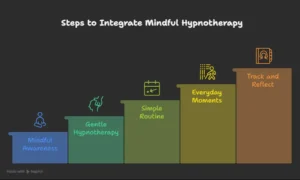
Building mindfulness and hypnotherapy into daily life doesn’t have to be complicated. It’s about creating short, consistent moments that reconnect you with your thoughts and emotions while helping your subconscious mind absorb positive change. Even a few minutes a day can make a big difference if done with purpose and attention.
 1. Start with Mindful Awareness
 1. Start with Mindful Awareness
Begin with something simple—like mindful breathing or observation. Take a few slow breaths, notice how your body feels, and let your attention rest on the present moment. The goal isn’t to control your thoughts but to notice them without reacting.
You can practice this while drinking coffee, walking, or waiting at a stoplight. These short pauses help your mind reset, making it easier to stay grounded through the day. For a first practice, pick something ordinary, like washing your hands. Feel the water and notice when your mind goes back to the day’s worries. Bring it back once, even if you only have a few seconds. That return of attention is the practice. You don’t need to stay focused for the entire task.
2. Add Gentle Hypnotherapy Practices
Once mindfulness feels natural, add short hypnotherapy exercises. These can include guided audio sessions, visualization, or positive affirmations repeated while relaxed. For example, listening to a 10-minute guided session before bed can help your subconscious absorb calm, empowering suggestions while your mind unwinds.
If you’re new to it, start with recorded hypnotherapy tracks from certified professionals. Over time, you’ll find which ones help you relax and focus best.
3. Create a Simple Routine
Combine both in a short daily flow:
- Begin with two minutes of mindful breathing.
- Follow with a short hypnotherapy or visualization session.
- End by quietly reflecting on how you feel.
This routine doesn’t require special equipment or a set schedule—just consistency. The more often you do it, the stronger your mental focus and emotional balance become.
4. Practice During Everyday Moments
You don’t need a quiet room to practice awareness. Use everyday experiences—washing dishes, driving, or walking—to stay mindful. If a stressful thought appears, take a deep breath, acknowledge it, and let it go.
Pair this with small hypnotherapy cues, like repeating a calm statement (“I’m safe,” “I’m in control,” “I’m improving every day”) when you feel tense. These simple reinforcements help connect the conscious and subconscious mind, turning practice into habit.
5. Track Progress and Reflect
Journaling after a session helps you see patterns—what calms you, what triggers stress, and how your focus changes over time. It’s not about perfection but progress. Over weeks, you’ll notice clearer thinking, more patience, and a stronger ability to manage emotions. Track one action you can see. Maybe you waited until your colleague had finished speaking before you answered, or you caught yourself rereading the same email and stood up for a short break. Write down what happened right afterward. At the end of a week, you may have a clearer sense of whether mindful breathing, guided imagery, or a break did the most for you.
Integrating both hypnotherapy and mindfulness is about steady growth, not big leaps. As you continue, their effects compound—quieting mental noise, building self-trust, and helping you live with more clarity and ease.
Use Mindfulness Practices for Stress Management
Try practicing mindfulness after a demanding conversation by noticing one sensation and naming the emotion. Guided hypnosis could then help you rehearse a coping strategy you can use in a similar conversation. In mental health treatment, mindfulness-based cognitive therapy and cognitive-behavioral therapy are structured approaches with their own goals. Ask the provider how any hypnosis or meditation fits into your care.
Common Misconceptions to Avoid
Even though mindfulness and hypnotherapy have become more popular, many people still misunderstand how they work. These misconceptions often stop them from exploring two practices that can truly improve emotional and mental well-being. Clearing up these ideas helps you approach both with confidence and realistic expectations.
-
1. “Hypnosis means losing control.”
This is one of the biggest myths. Hypnotherapy isn’t about someone taking control of your mind—it’s about helping you access deeper focus and awareness. You remain awake, aware, and in charge the entire time. The therapist simply guides your attention so your mind can process thoughts and emotions more effectively. In reality, hypnosis increases control over habits and emotions, rather than removing it.
-
2. “Mindfulness means stopping all thoughts.”
Mindfulness isn’t about forcing a blank mind. It’s about observing your thoughts without judgment and returning your focus to the present. Everyone’s mind wanders—that’s normal. The goal is to notice when it does and gently bring it back. Over time, this builds calm awareness and emotional balance, not mental emptiness.
-
3. “You need hours every day for it to work.”
Brief exercises can help you learn the steps. If you want to evaluate a longer relaxation or stress reduction program, look at what the program actually involves and allow enough time to see whether it helps in your day.
4. “Hypnotherapy works instantly.”
While some people experience quick breakthroughs, most results come gradually. The subconscious learns through repetition and gentle reinforcement. Each session helps your mind absorb positive patterns a bit deeper. Think of it as training your mind the same way you’d strengthen a muscle—with steady, repeated effort.
-
5. “Mindfulness and hypnotherapy are the same thing.”
They share similarities—both use focus and relaxation—but they serve different purposes. Mindfulness builds awareness and acceptance. Hypnotherapy creates change through suggestion and subconscious reprogramming. When combined, they balance each other perfectly: mindfulness helps you notice, and hypnotherapy helps you transform.
Can Mindful Hypnotherapy Help You Manage Stress?
Some practitioners call mindful hypnotherapy a mind-body approach because it pairs attention to sensations with therapeutic suggestions. People sometimes describe a hypnotic trance as an altered state of consciousness. That label does not establish a benefit. Research on the feasibility of mindful hypnotherapy asks whether people can use and accept the combined practice. It differs from proving a lasting effect on stress, chronic pain, or overall well-being.
Conclusion
Mindfulness and hypnotherapy together offer more than relaxation—they build lasting balance between awareness and change. Mindfulness keeps you present, while hypnotherapy helps reshape deeper patterns holding you back.
The real transformation happens through small, consistent practice. A few mindful minutes or a short guided session can gradually quiet the mind, ease stress, and strengthen focus.
Lasting calm doesn’t come from control—it comes from understanding yourself better. With mindfulness and hypnotherapy working together, that understanding becomes natural, steady, and real.
