
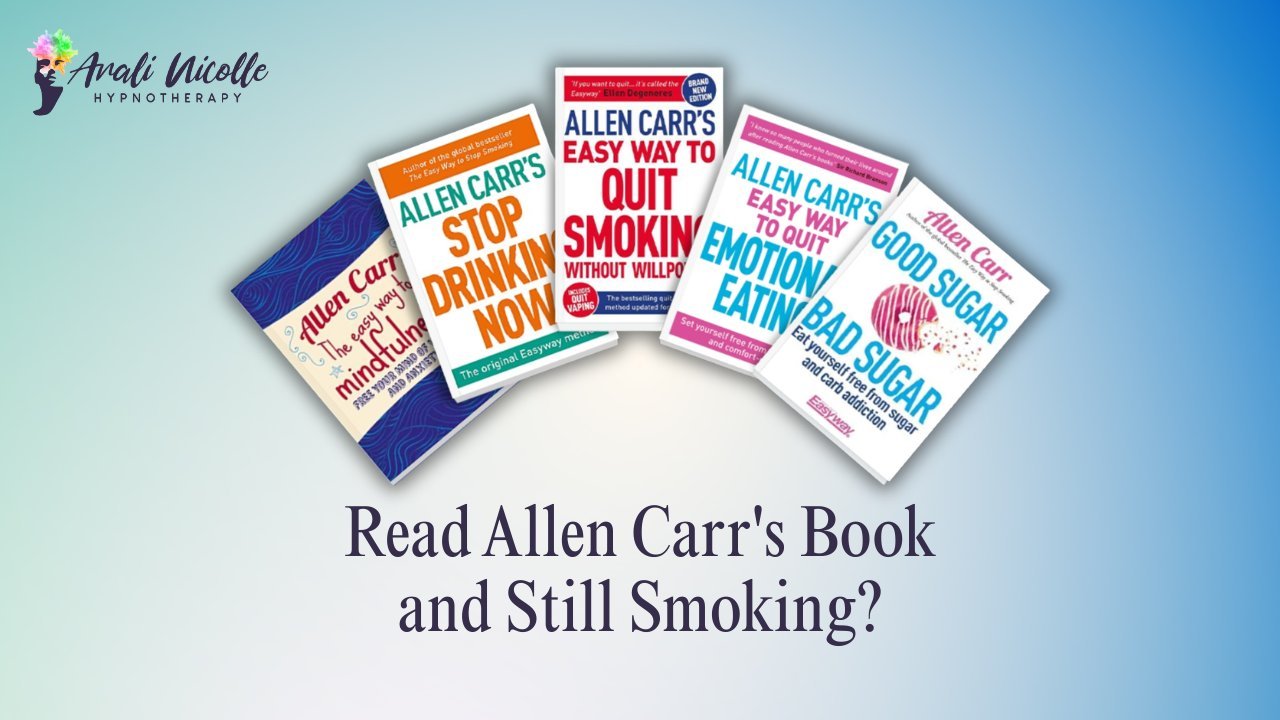
If Allen Carr’s The Easy Way to Stop Smoking worked for you, you wouldn’t still be smoking.
And I want to be clear about something right from the start:
Allen Carr’s Easy Way offers a different way to think about cigarettes. If the book made sense but you still smoked, it may help to identify which moment the reading didn’t prepare you for. A morning craving, a difficult conversation, and an evening with friends who smoke are very different tests of a quit plan.
If you’re one of those people, that’s incredible. Allen Carr’s method is powerful, and for many smokers, it’s exactly what they need.
But if you’re reading this, you’re probably not one of those people.
You read the book. You understood it. You agreed with everything he said. You even felt motivated.
And you’re still smoking.
So what does that mean? Does it mean you didn’t “get it”? That you’re not ready? That you’re somehow more addicted than the people for whom it worked?
No.
It means your smoking isn’t the type of smoking Allen Carr’s method was designed to address.
Let me explain why the book didn’t work for you—and what to do instead.
Table of Contents
How Allen Carr’s Easyway Method Works
Before we talk about why the book didn’t work for you, let’s talk about why it does work for so many people. In a randomized trial comparing an Allen Carr Easyway programme with specialist smoking cessation support, researchers did not find clear evidence of a difference in efficacy. The programme was delivered in a structured setting, which is a different intervention from reading at home. The trial also doesn’t say the book should be enough for a particular person.
Allen Carr’s method is based on a simple but powerful premise:
Smoking is a trap. And once you see the trap, you can walk out of it.
Here’s how he dismantles the illusion:
He Shows You That Cigarettes Don’t Give You Anything
Most smokers believe cigarettes provide:
- Stress relief
- Enjoyment
- Confidence
- A break
- Focus
Allen Carr systematically breaks down each of these beliefs and shows you they’re illusions.
The “relief” you feel when you smoke? That’s just ending the withdrawal from the last cigarette.
The “enjoyment”? You’ve been conditioned to associate pleasure with something that’s actually harming you.
The “break”? You could take a break without smoking.
He helps you see that you’re not giving up anything when you quit. Because cigarettes never gave you anything in the first place.
He Reframes Quitting as Liberation, Not Deprivation
Most quit-smoking methods frame quitting as sacrifice:
“You can’t have cigarettes anymore.”
“You need to resist the urge.”
“You’re giving up something you enjoy.”
Allen Carr flips that:
“You’re not giving up anything. You’re escaping a trap.”
“You’re gaining freedom, not losing something.”
“There’s nothing to resist because cigarettes don’t provide what you think they do.”
This reframe is psychologically powerful. Because when you truly believe you’re not losing anything, quitting doesn’t feel like deprivation.
He Works at the Cognitive Level
Allen Carr’s method is all about changing how you think about smoking. Try describing the idea that felt most helpful, such as questioning whether a cigarette really provides relief. Then connect it to a real plan. The next time you want to smoke on a break, step away for a few minutes, and check what changed. You can learn whether the pause itself helps and whether a nicotine craving remains.
He uses logic, reason, and cognitive reframing to help you see smoking differently.
And for many people, that’s all it takes.
Once they understand the trap intellectually, they can walk away from cigarettes.
That’s the brilliance of his method. And that’s also its limitation.
Is Allen Carr’s Easyway Seminar the Same as the Book?
Allen Carr’s Easyway is available in different formats. Many people read this book or listen to an audiobook. Research on an Easyway seminar with a facilitator isn’t the same as research on the best-selling book alone. If someone says they successfully quit using Allen Carr’s easy way to quit smoking, ask which version they used and what else they tried.
Can Changing How You Think Help You Quit Smoking?
Allen Carr’s method works incredibly well for a specific type of smoker.
If your smoking is primarily thought-driven, cognitive reframing can set you free.
Thought-Driven Smoking Looks Like:
- You picked up smoking casually—socially, at parties, because it was cool
- You smoke out of habit, not emotional need
- You don’t use cigarettes to cope with stress, trauma, or overwhelming emotions
- Smoking isn’t deeply tied to your identity
- You can go days without smoking and not feel emotionally destabilized
- You smoke because you believe cigarettes provide something—and once you realize they don’t, you can stop
For this type of smoker, Allen Carr’s book is perfect.
Because once you intellectually understand that cigarettes aren’t providing what you thought they were, the behavior loses its appeal.
You see the trap. You walk out. You’re free.
But if you’re still smoking after reading the book, your smoking isn’t thought-driven.
Why Are There Different Versions of Allen Carr’s Easyway to Stop Smoking?
The original book was published in 1985. The company describes a newer version of Allen Carr’s Easyway to Quit Smoking as an update for the 2020s. Its website credits co-author John Dicey and chairman Robin Hayley with continuing and updating the work. The publisher has reported sales of more than 20 million copies for a US edition listing. That is a sales figure. It does not tell you how many readers successfully quit smoking or whether any one edition will work for you. See the Easyway edition announcement and publisher’s book listing.
How the Best-Selling Quit Smoking Method Was Updated
Allen Carr’s company describes its newer edition as an update for the 2020s. The original smoking method was updated for the 21st century to address changes in how people use nicotine, including vaping. If you decide to read this book, check the year and full title so you know whether a review describes the same edition. When someone says they were able to quit after reading, ask about later follow-up rather than assuming it worked immediately.
Is The Easy Way to Quit Smoking the Same as The Easy Way to Stop Smoking?
Different Allen Carr editions and titles may describe the Easyway approach in similar terms. Check the full title and whether the version covers smoking, vaping or another habit before buying it. If you have already read this book, there may be more value in planning for a difficult quit day than rereading a promise that you can be a happy nonsmoker for the rest of your life.
How Allen Carr’s Easyway Group Seminars Compare With a Specialist Stop Smoking Service
In a randomized trial with 620 participants, 19.4% of the Easyway group and 14.8% of those assigned to specialist support remained smoke-free through 26 weeks. The difference was uncertain. The NICE guideline lists the in-person group seminar as one option for adults. The seminar gives you a structured meeting and follow-up options. Evidence for live seminars doesn’t mean the book will work perfectly for every reader.
Do You Need the Easyway Audiobook, the Book or a Seminar to Stop Smoking?
If you already read this book, compare which parts were easy to use without a facilitator. Allen Carr’s Easyway is built around changing how a person sees smoking. A seminar also provides a scheduled group setting and an opportunity to ask questions. The trial comparing a programme with specialist support does not establish that an audiobook or a book now on sale will work in the same way.
Can the Method for Quitting Quickly Help You Stop Smoking Without Willpower Alone?
A method can be quick to deliver while your experience of withdrawal takes longer. If you finish the book and still have a desire to smoke, choose something you can ask about at your next appointment. Talk about support and your quit date, what went wrong after your final cigarette, and what happens when you spend time with others who smoke.
Can the Best-Selling Quit Smoking Method Help if You Didn’t Find It Easy?
Some readers hear that the book removes the desire to smoke and expect quitting to be easy and even enjoyable straight away. Treat that as a description of what the method aims for. Your decision to quit, when you first encounter an urge, and what help you can access all matter. Sales figures and stories from people who successfully quit smoking give different information from a trial that checks smoking status after a set follow-up period.
Can Easyway Help You Quit Smoking Without Willpower?
If you read Allen Carr’s Easy Way to Stop Smoking because you want a method for quitting without relying on willpower, separate the book’s message from what research has shown. A structured Easyway program offers more than the words on the page. Compare the format, any follow-up, and the other options you could use if you still smoke. Anyone with a history of cigarette smoking can benefit from discussing their risk of lung cancer and other health concerns with a clinician.
When Live Group Seminars Can Offer More Structure Than the Book
If you want to stop smoking without using willpower alone, compare what each smoking cessation method offers. Easyway live seminars give you a scheduled group meeting. A book gives you a structured set of ideas you can read at your pace. The Easyway website describes its live group seminars. Neither format tells you in advance that you will find it easy. If you’re truly ready to quit but still need help, talk to a clinician about your cigarette routine, your desire to smoke and other smoking cessation methods.
How to Compare Allen Carr’s Book With Other Cessation Methods
Read the version you have and decide whether it gives you a structured plan for your own routine. If someone recommended this book because they found it easy to stop, ask what support they used after the date they chose to quit. You can use the Allen Carr ideas you found helpful, try a smoking program, or ask about treatment for your nicotine product use. You do not need to decide today that you will never smoke again before speaking to a quit coach.
Why Allen Carr’s Book Is Not Enough for Everyone
Here’s what most people don’t understand:
Not all smoking is cognitive. Some smoking is subconscious.
And you can’t resolve a subconscious problem with conscious understanding.
Let me explain the difference:
Cognitive Smoking:
- Based on beliefs and thought patterns
- “I smoke because I think cigarettes help me relax”
- Can be resolved by changing your thoughts
- Responds well to logic and reframing
Subconscious Smoking:
- Based on identity, nervous system protection, and emotional programming
- “I smoke because my nervous system believes cigarettes are keeping me safe”
- Cannot be resolved by changing your thoughts alone
- Requires deeper subconscious work
Cognitive reframing can help someone reconsider an expectation about smoking. There is no reliable test that sorts people into groups that will or won’t succeed with a book. Your past attempts give you practical clues, such as whether cravings rose around a repeated situation or appeared throughout the day.
The book may have helped with one part of quitting while other barriers remained, including nicotine withdrawal and cues that occur in daily life.
What if You Still Feel Nicotine Withdrawal Symptoms?
The promise of a way to quit smoking without willpower can sound appealing. But withdrawal symptoms and nicotine addiction vary by person. If you’ve already had what you hoped would be your final cigarette and then went back, consider talking to a quit coach. You can make the next attempt with nicotine replacement or other support. Tell them if you also vape or want to quit vaping.
What to Keep From the Easyway Method if You Still Smoke
Keep the part you could use, such as seeing a cigarette as something you have a choice about. Consider other support if that shift didn’t change your withdrawal symptoms. A book can describe a future without smoking. A coach or clinician can help you translate that idea into an effective plan around the people you see and the places you go.
How to Quit Smoking Without Willpower Alone After Reading Allen Carr
You can want to become a happy nonsmoker and still need help with nicotine withdrawal symptoms. If you tried Allen Carr’s easy way to stop and restarted after your final cigarette, discuss whether nicotine replacement is appropriate. Look for the moment you want to stop smoking and the moment it becomes difficult. That difference helps you choose a way to quit that you can use in your own setting.
What the Easyway Smoking Method Means by Quitting Without Willpower
Allen Carr’s Easy Way to Quit Smoking asks readers to question what they get from a cigarette. This differs from a stop smoking method that simply asks readers to resist the urge. Quitting without willpower is an appealing idea. A nicotine addiction plan can still include medication, counselling, or support for cravings after the final cigarette. If you want a way to quit smoking without a daily argument with yourself, ask which real-life trigger you could change before your next attempt.
Can You Use the Easyway Method to Quit Vaping Too?
If your edition includes material about quitting vaping, check what it actually recommends. Smoking and vaping both can involve nicotine addiction, but their routines may differ. Meet with a quit coach if you want to quit vaping and stop smoking. Talk about how each product fits into your life and what support you want for the rest of your quit attempt.
What Does Allen Carr’s Easy Way to Quit Smoking Ask You to Do?
Think through the steps you actually tried. Did you read this book all the way through or switch to an audiobook? Did you follow the suggestions about a final cigarette? If you expected to become a happy nonsmoker immediately, give yourself time to work on the part that surprised you. A strong urge in week one is a reason to look at nicotine dependence and withdrawal symptoms, not a reason to dismiss your effort.
Easyway Books and Audiobooks: What Changes by Edition?
The Easyway name covers books, audio versions, and programs. Check which edition you are reading, whether it includes quit vaping material, and whether it was published for the kind of nicotine use you want to change. A claim that the method was updated for the 21st century tells you about the edition, but you still need to ask what the supporting research tested. If someone describes how they finally quit using Allen Carr’s method, check whether they read the book or attended a seminar with follow-up.
Nicotine Addiction and the Easy Way to Quit Smoking
An Easyway book can influence how you think about cigarettes. A book cannot assess your withdrawal symptoms or choose a treatment that fits your health history. If you’ve read Allen Carr and want to quit smoking without willpower alone, talk about what happened after your final cigarette. Be specific about when you went back and whether you still want to stop smoking or quit vaping.
The Difference Between Cognitive Smoking and Subconscious Smoking
Let me show you what subconscious smoking looks like:
Your Smoking Started as a Coping Mechanism
Maybe you started smoking 15 years ago when you were going through something overwhelming—a breakup, a loss, a stressful period in your life.
Your nervous system was dysregulated. You felt out of control. And cigarettes helped you feel calm.
Your brain recorded that as: “Cigarettes = safety.”
Now, 15 years later, that programming is still there. Even if you consciously know cigarettes aren’t actually helping, your subconscious still believes they are.
Allen Carr can explain logically why cigarettes don’t relieve stress. But that doesn’t update the subconscious programming.
Your Smoking Is Tied to Identity
Maybe smoking became part of who you are.
The version of you that smokes is confident, in control, rebellious, or independent.
And quitting feels like losing that version of yourself.
Allen Carr can help you understand intellectually that cigarettes don’t define you. But if your identity is woven into smoking, reading a book won’t untangle it.
Your Smoking Is How You Regulate Emotions
Maybe cigarettes are how you’ve learned to process anxiety, anger, sadness, or overwhelm.
When emotions feel too big, you smoke to create distance from them.
Allen Carr can show you logically that cigarettes don’t actually regulate emotions. But if you’ve never learned another way to cope, that understanding doesn’t give you a replacement tool.
Your Nervous System Believes Smoking Is Protection
This is the deepest level.
Your nervous system—the part of your brain that governs survival—has decided that cigarettes are necessary for your wellbeing.
Not because you consciously believe that. But because at some point, your brain made that association, and it never updated.
Allen Carr speaks to your conscious mind. But your nervous system doesn’t listen to logic. It listens to protection.
And if smoking is being protected at the nervous system level, no amount of cognitive reframing will override it.
Choosing a Date to Quit and Planning for Your Final Cigarette
You may worry you will think about cigarettes for the rest of your life, especially if cravings catch you off guard. Tell your support person which moment makes you want to smoke. If you need help with nicotine addiction, discuss cessation options with a clinician.
What if You Want to Quit Vaping as Well as Cigarettes?
If you use nicotine in more than one way, explain when you smoke and when you vape. Some readers may have a version of Allen Carr’s books about quitting vaping, but changing one habit may leave another intact. Talk through your tobacco and vaping routines with a quit coach so you have an option for each high-risk part of the day.
Signs Your Smoking Is Subconscious (Not Just a Thought Pattern)
How do you know if your smoking is subconscious?
Here are the signs:
Sign #1: You Read Allen Carr (or Other Books) and You’re Still Smoking
If you’re still smoking, you can keep anything helpful from the book and add support for what it left out. Record the time of your first cigarette and what was happening, especially if it was soon after waking. Bring the record to an appointment so you can discuss nicotine dependence and your usual cues.
Understanding the method does not tell you what made the last attempt difficult. The circumstances of the first cigarette after quitting can give you a more concrete clue.
Sign #2: You’ve Been Smoking for 10+ Years
The longer you’ve been smoking, the more likely it’s wired into your subconscious as an automatic pattern and identity marker.
The number of years you’ve smoked can make some routines familiar, but it doesn’t determine which treatment will help you.
Sign #3: You Use Smoking to Manage Stress or Emotions
If cigarettes are your primary coping mechanism for stress, anxiety, anger, or overwhelm, that’s subconscious.
Your nervous system has learned: “Stress = cigarette = calm.”
That’s not a thought. That’s a survival pattern.
Sign #4: Quitting Feels Like Losing Part of Yourself
If the idea of quitting makes you think “I don’t know who I’d be without cigarettes,” that’s identity-level smoking.
And identity lives in the subconscious.
Sign #5: You Hate Smoking But Can’t Stop
If you consciously want to quit—if you hate the smell, the cost, the health impact—but you still can’t stop, that’s the clearest sign.
Your conscious mind wants to quit. But your subconscious is holding on.
And conscious understanding (like reading a book) can’t override subconscious programming.
Sign #6: You’ve Tried Multiple Methods and Nothing Has Stuck
If you’ve tried books, apps, patches, gum, cold turkey, and you keep coming back to smoking, you’re dealing with something deeper than conscious choice.
Consider which part you need more help with now.
What to Do After Reading The Easy Way to Stop Smoking
The useful question isn’t whether you got the bestseller wrong. It is which belief about cigarettes the book helped you question and which real-life situation it didn’t prepare you for. For example, you might agree with Allen Carr that cigarettes aren’t your only way to get relief, but still need a plan for the first work break after you quit.
What Subconscious Work Actually Does (That Books Can’t)
So what does subconscious work look like? And how is it different from reading a book?
Books Work at the Conscious Level
When you read Allen Carr (or any quit-smoking book), you’re processing information with your conscious mind.
You’re learning. You’re understanding. You’re reframing your thoughts.
And for some people, that’s enough. Because their smoking lives at the conscious level.
But if your smoking lives in your subconscious, conscious understanding doesn’t reach it.
You can know intellectually that cigarettes don’t help and still feel like you need them.
Hypnotherapy Works at the Subconscious Level
In hypnotherapy, you might rehearse what you’ll do in a difficult situation while focusing your attention on an agreed suggestion. Research has not established that hypnosis works better than other behavioral support for smoking cessation. If you decide to try it, ask how the practitioner measures progress and what your other options are.
Here’s what that looks like:
Step 1: Identify the Subconscious Root
We don’t just talk about smoking as a habit. We explore:
- When did smoking start?
- What was happening emotionally at that time?
- What need was smoking meeting?
- What does your nervous system believe smoking is protecting?
This isn’t surface-level conversation. This is deep subconscious exploration.
Step 2: Access the Subconscious Programming
Through hypnotherapy, we work directly with the part of your mind that’s holding onto smoking.
Not the part that knows you should quit. The part that believes you need to smoke.
Step 3: Resolve the Root Cause
Once we’ve identified why your nervous system is protecting smoking, we can resolve it.
We don’t just cover it up with willpower or logic. We remove it at the source.
We update the subconscious belief:
- Cigarettes ≠ safety
- Cigarettes ≠ stress relief
- Cigarettes ≠ who you are
Step 4: Rewire the Automatic Patterns
We also work on the automatic associations your brain has built:
Coffee → cigarette becomes coffee → just coffee.
Stress → cigarette becomes stress → deep breath, new coping tool.
Practicing a different response can make it easier to remember when the situation comes up. Cravings still vary, so plan for the possibility that one will show up.
Step 5: Shift the Identity
We work with your subconscious to shift your identity from “smoker” to “non-smoker.”
Not as a conscious affirmation. But as a deep, subconscious knowing.
And once that identity shifts, you’re not resisting cigarettes anymore. You simply don’t identify with them.
What to Do If Allen Carr’s Method Didn’t Work for You
If you read The Easy Way to Stop Smoking and you’re still smoking, here’s what you need to know:
You didn’t fail. The book didn’t fail. You just need a different approach.
You can keep one useful idea from Easyway and prepare additional support for the part of the day where reading alone wasn’t enough.
Here’s what that looks like:
Step 1: Identify What Still Makes You Want to Smoke
Stop blaming yourself for “not getting it” or “not trying hard enough.”
If a book wasn’t enough, you have other options for support.
Once you accept that, you can stop trying the same approach and start looking for the right one.
Step 2: Work With a Professional Who Specializes in Subconscious Work
A clinician or quit coach can help turn the reading into a plan for a particular day. Tell them what you’ve already tried and the part of your routine you want to change next.
That could be:
- A hypnotherapist (like me) who specializes in smoking cessation
- A therapist who works with nervous system regulation and trauma
- A professional who understands identity-level transformation
The key is: they need to work at the subconscious level. Not just the cognitive level.
Step 3: Be Willing to Go Deeper
Subconscious work requires honesty, vulnerability, and willingness to explore the real reasons you smoke.
It’s not just about understanding the trap. It’s about resolving what the trap has been protecting you from.
That work is deeper than reading a book. But it’s also more effective.
Step 4: Give Yourself Permission to Need More Than a Book
There’s nothing wrong with needing professional support. You can ask a friend to meet indoors instead of taking a smoke break with you. Try asking before the next get-together. That makes the social decision easier when people stand up to go outside.
Some problems can be solved with self-help. Some problems need guided work.
If your smoking is subconscious, you’re not failing by seeking help. You’re being smart.
If the Book Wasn’t Enough, Add Support
If you’ve read Allen Carr’s book and you’re still smoking, the problem isn’t that you don’t understand.
You understand perfectly.
You know cigarettes don’t actually help. You know you’re in a trap. You know quitting would be better for you.
But knowing doesn’t change the subconscious programming.
And that’s not your fault.
You’ve just been trying to solve a subconscious problem with conscious tools.
Try a new response in a real situation and see what it changes. That experience can give you something specific to discuss with a quit coach.
That’s where hypnotherapy comes in.
Not to give you more information. But to help you access the part of your mind that’s been holding onto smoking—and resolve it from the inside out.
When that shift happens, you don’t just know you should quit.
You genuinely don’t want to smoke anymore.
And that’s the difference between cognitive understanding and subconscious resolution.
Ready to quit without the struggle? Book a free Clarity Call.
